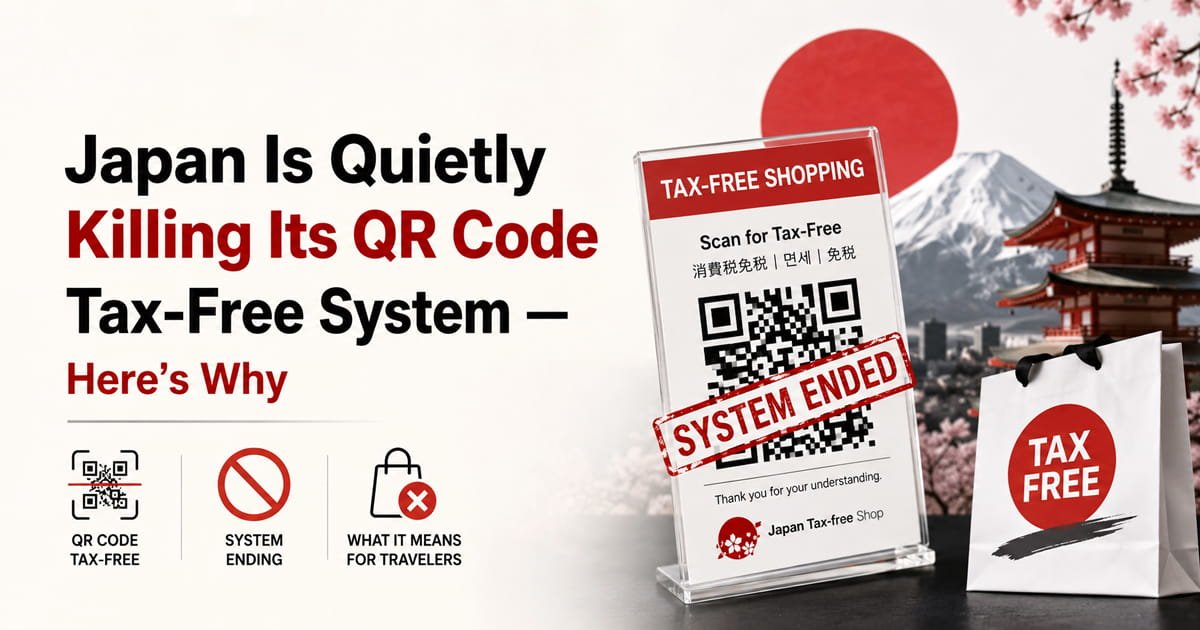
From November 2026, Japan is scrapping the QR code that made tax-free shopping fast and going back to a slower, receipt-based refund process. Here's what's actually going on, and what it means if you're heading there.
Usually when we write about QR codes here, it's about somewhere adding them a shop, a menu, a visa process. Japan is doing the opposite, and it's worth talking about, because it's a rare case of a country looking at a QR based system and deciding the old paper way was actually safer.
Right now, if you are shopping tax free in Japan, a lot of stores let you flash a QR code from the Visit Japan Web app instead of your actual passport. Scan it, get the discount at checkout, done. That entire setup goes away on November 1, 2026.
What's changing
Up until October 31, the system works like this you find a tax free shop, show your passport or the app QR code, and the tax gets removed right there at the till. Easy, immediate, no paperwork to chase later.
From November 1, that flips completely. You pay full price, tax included, at checkout no QR code, no on the spot discount. To actually get your money back, you have to go to a kiosk at the airport before you check your bags, scan your passport there, and only then does customs confirm you are taking the stuff out of the country. The refund itself might land as a bank transfer, a card credit, or cash, depending on the store, and it can take a while to actually show up.
So the QR code is not being replaced by a better QR code. It's being replaced by a passport scan and a customs checkpoint. That's the part that surprised us QR codes usually get added to processes, not removed from them.
Why would anyone remove something that was working fine?
The honest answer, based on Japan's own explanation, is reselling. A meaningful number of people were buying goods tax free in Japan and reselling them afterward either shipping them home and selling online, or in some cases reselling within Japan itself instead of actually using the exemption the way it's meant to work, for personal purchases genuinely leaving the country. A QR code flashed at checkout does not verify any of that it just confirms you are a registered visitor. There is no physical check happening the way there is when a customs officer is standing in front of you with your actual bags at the airport.
There's a second detail buried in the new rules that fits the same pattern since April 2025, travelers can no longer qualify for tax free status just by mailing their purchases home and showing shipping paperwork. That loophole and the QR-code convenience together made it too easy to claim an exemption without the goods ever really leaving Japan in the traveler's own luggage. The new system forces a physical customs check before the refund happens, which is slower for everyone, but apparently closes that gap.
What this actually means if you're going to Japan after November
Budget more time before you fly out. The tax free procedure now has to happen at a dedicated kiosk in the departure area, before you check any luggage that has tax free items in it. Once a bag is checked, you can't go back and process it. If your flight already has you cutting it close, this adds a real step you can't skip.
You'll also need to actually hold onto everything you bought tax free until that kiosk visit not opened, not used, not packed away and forgotten in a suitcase pocket. Customs checks per receipt, not per item, so if even one thing from a transaction is missing or already used, the whole receipt loses its refund eligibility.
And the refund isn't instant anymore. Where the old system took the tax off before you even left the store, the new one has you paying full price and waiting for money to come back through a bank transfer, card refund, or occasionally cash at the airport, depending on which refund provider the store uses.
The bigger pattern here
This is a good reminder that a QR code is just a delivery mechanism it's not automatically more secure or more efficient than what it replaces, it just moves information faster. When that speed gets abused, removing the QR code and adding a manual check back in is sometimes the actual fix, even if it's a step backward in convenience.
Most of the QR adoption stories we cover go one direction paper gets replaced by a scan, and things get faster. Japan's tax free system is the opposite case, and it's a useful one to know about if a trip to Japan is anywhere in your plans this year the QR code that used to make shopping there faster won't be there anymore, and the process at the airport is going to take longer than you might remember from before.
Setting up a QR code for something that needs to stay simple and fast a menu, a contact card, an event link? Create one for free in under a minute, no account required.